
Front walks, side paths and garden paths
Paver Walkways in Minneapolis, MN
Level, well-drained paths you can shovel without catching an edge.
- Free on-site estimates
- Written, itemized quotes with base depth listed
- Base built in compacted lifts, not dumped and leveled
Walks You Can Shovel Without Tripping
Paver walkways take more foot traffic and more shovel strokes than any other surface around the house. The front walk carries guests, mail and packages, and in winter it is the surface you clear most often. A walk with one heaved paver or a sunken section is a tripping hazard, and a snow shovel finds every lip. Building a walk well is mostly about keeping it flat and keeping water from sitting on it or under it.
Front walks on older lots
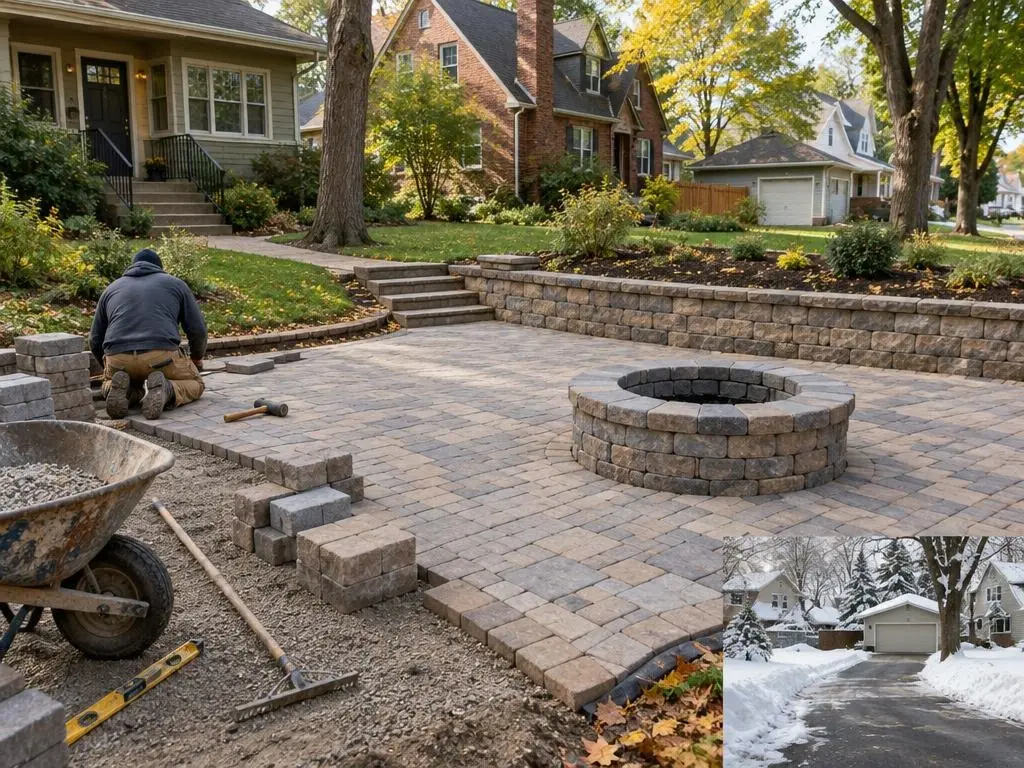
Many Minneapolis houses sit above the sidewalk, with a short walk, a few steps and a stoop. The original concrete walks on these lots are often a century old, cracked and pitched toward the house. Replacing one with pavers means breaking out the old concrete, checking how water moves from the stoop and the lawn, and setting a new grade that sheds water sideways or toward the street. Where the walk meets city sidewalk, we stop at the property line; the public sidewalk is the city's.
Width and layout
A front walk wide enough for two people side by side is usually about 4 feet; 3 feet is enough for a side or garden path. Gentle curves look good but cost more because of cutting. Straight walks with a border are quick to shovel. If the walk leads to steps, the step treads and risers should be consistent, and we plan the height change at the estimate rather than improvising it on site.
Base for foot traffic
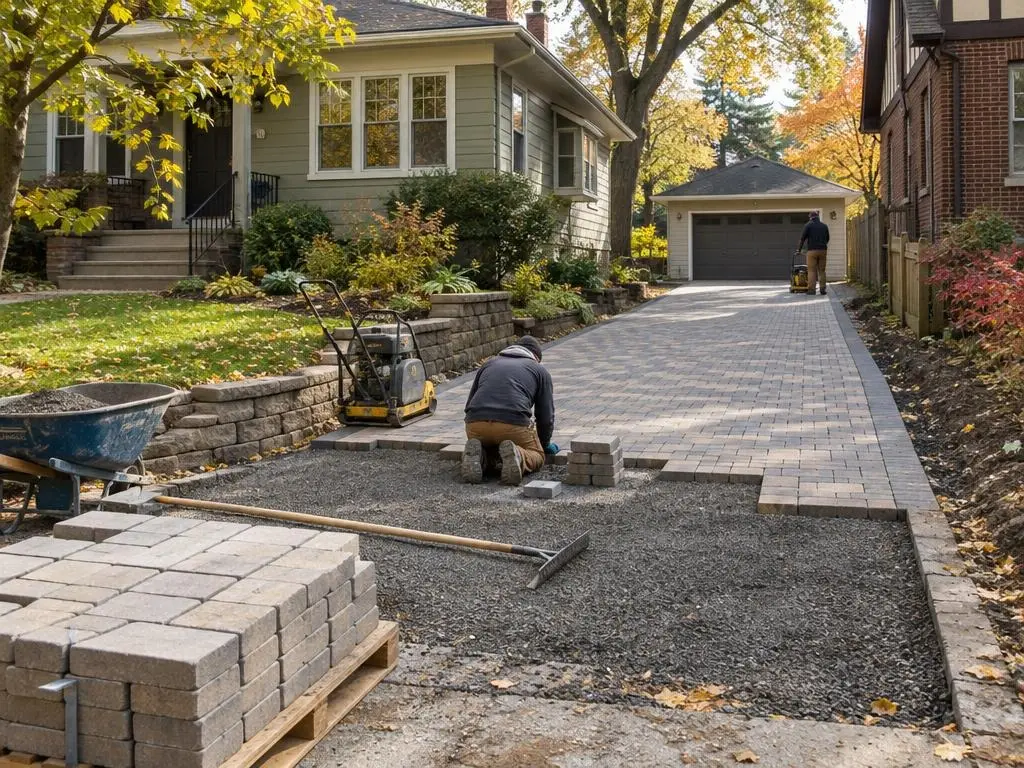
Unilock recommends a compacted base of 4 to 6 inches for walkways, deeper on clay or poorly draining soil. We dig past the walk edge, compact the soil, add aggregate in thin lifts and set the bedding with a cross slope of 1 to 2 percent so melting snow drains off instead of refreezing in the middle. Edge restraint on both sides keeps pavers from drifting into the lawn, a frequent way walks fail.
Ice, salt and shade
Shaded walks on the north side of a house can stay icy for days. A textured paver surface gives better footing than a smooth one. If you use rock salt, ask about the paver's resistance to de-icers; some homeowners switch to sand or a gentler de-icer on new pavers. Downspouts that empty across a walk are a common cause of ice sheets, and moving them is often part of the job.
Garden and side yard paths
Side yards on city lots are often narrow and shaded, with a gate to the backyard and a path to the alley. Stepping stones or a narrow paver path are both options here, and access for equipment is limited, so we plan how material gets in before we price it.
What This Covers
Walkway work runs from the front door to the backyard gate.
Front entry walks
Replacing old concrete walks with pavers set to a new, drained grade.
Side yard and alley paths
Narrow paths from the gate to the garage or alley.
Garden paths
Paver or stepping-stone paths through beds and lawns.
Steps and landings
Block or paver steps and landings where a walk changes level.
Typical Paver Walkway Costs
| Item | Published national range |
|---|---|
| Installed, per square foot | $13 to $27 |
| 80 sq ft (about 20 ft by 4 ft) | $1,040 to $2,160 |
| 140 sq ft | $1,820 to $3,780 |
| Concrete pavers, installed | $7 to $16 per sq ft |
| Clay brick pavers, installed | $10 to $19 per sq ft |
| Natural stone pavers, installed | $13 to $36 per sq ft |
Published national ranges from Lawn Love (2026). Twin Cities prices can differ, and excavation depth, removal of old surfaces, access and the paver you choose change the total. Your written estimate is the price.
How It Works
1. Walk the route
We look at grade, steps, downspouts and where water and snow go.
2. Remove and dig
Old concrete comes out and the path is excavated past its edges.
3. Base and slope
Aggregate is compacted in lifts and the bedding set with a cross slope.
4. Lay and edge
Pavers are laid, edges restrained on both sides, and joints filled.
Paver Walkways Questions
How much does a paver walkway cost?
Lawn Love's 2026 figures average $13 to $27 per square foot installed, so a 20 by 4 foot front walk lands around $1,040 to $2,160. Old concrete removal, steps and natural stone add cost.
How wide should a front walkway be?
About 4 feet lets two people walk side by side and is easy to shovel. Side and garden paths are often 3 feet.
Can I use rock salt on paver walkways?
Many concrete pavers tolerate it, but de-icers can wear some surfaces over time. Check the manufacturer's guidance for your product, and avoid sand on permeable pavers.
Can you replace the city sidewalk in front of my house?
No. Public sidewalk belongs to the city and has its own rules and contractors. We build up to your property line.
Paver Walkways Service Areas
- Pavers in Minneapolis, MN
- Pavers in Saint Paul, MN
- Pavers in Edina, MN
- Pavers in Bloomington, MN
- Pavers in Plymouth, MN
- Pavers in Maple Grove, MN
- Pavers in Eden Prairie, MN
- Pavers in Minnetonka, MN
- Pavers in Blaine, MN
- Pavers in Coon Rapids, MN
- Pavers in Lakeville, MN
- Pavers in Apple Valley, MN
- Pavers in Eagan, MN
- Pavers in Woodbury, MN
- Pavers in Prior Lake, MN
- Pavers in Chanhassen, MN
- Pavers in Shakopee, MN
- Pavers in Andover, MN
Get a Paver Walkways Estimate
Free estimates for paver walkways in Minneapolis and nearby.