
Sand, wetlands and former peat sod farms
Pavers in Blaine, MN
Blaine's sandy ground drains quickly, but some neighborhoods sit on fill over old wet areas. We dig and test before we build so your patio stays flat.
- Free on-site estimates
- Written, itemized quotes with base depth listed
- Base built in compacted lifts, not dumped and leveled
What Blaine Soil Means for a Paver Project
Pavers in Blaine often sit on sandy ground. Sandy soil and abundant wetlands kept most of the area from being farmed, and it stayed largely hunting land until after World War II. Later, sand dug out to create ponds was used to raise building sites, opening thousands of acres of former peat sod farms to development. For a patio or driveway, that history matters: native sand is a friendly base to work on, while filled or low spots need a closer look before the first paver goes down.
Working with sand
Sand drains well, which helps keep water from sitting in a paver base and freezing there. It also compacts in a predictable way when it is moist and worked in thin lifts. Unilock recommends compacting base material in layers of 3 to 4 inches rather than all at once, and we follow that on every job. Good drainage is also why sandy lots are often reasonable candidates for permeable pavers, which rely on water soaking into the subgrade.
Watching for soft spots
Where old wet ground or peat was built up with fill, the soil under a yard can vary from one corner to the next. When we excavate, we probe the subgrade. If we hit organic, spongy material, we remove it and replace it with compacted aggregate before building the base. Skipping that step is a common reason a patio develops a low corner a few years in. If we find conditions that change the scope, we stop and walk you through it before doing more.
Many first-time yards
Blaine grew from 57,186 residents in 2010 to 70,222 in 2020, and a 2025 estimate puts it near 76,600. Plenty of homes are new enough that the yard is still a blank slate: sod, a builder's concrete stoop and maybe a small slab outside the patio door. For these homes we often design in phases, starting with a main patio and a walk to the side yard, then adding a fire pit, seating wall or driveway border later. We set grades and leave edges so the later phases tie in cleanly.
Services in Blaine
- New paver patios on recently built homes
- Paver driveways and driveway extensions for a third car or trailer pad
- Front walks that replace a builder's narrow concrete path
- Retaining and garden walls around ponds and grade changes
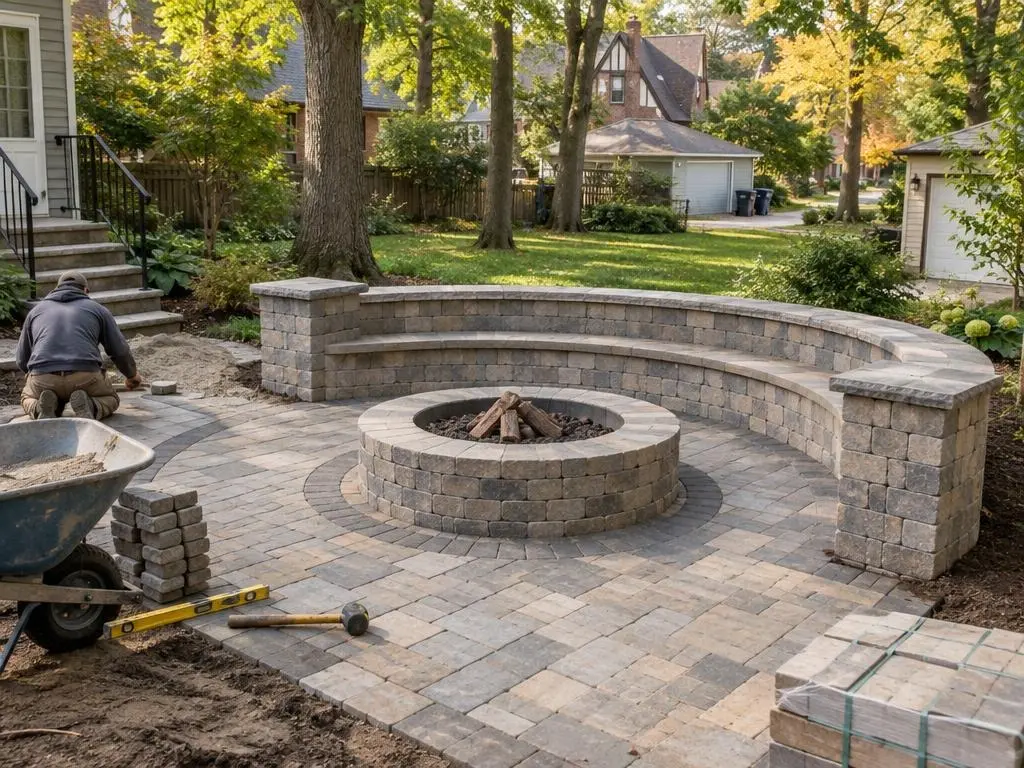
- Fire pits, seating walls and outdoor gathering areas
- Repair and releveling of existing pavers
Near ponds and wetlands
Blaine has 66 parks, a 500-acre wetland sanctuary and lakes such as Sunrise Lake and Laddie Lake. Lots that back onto a pond or wetland often have drainage easements or buffers set by the city, the developer or a watershed district. Before we draw anything close to the water, it is worth checking your plat and any HOA rules, and we keep the patio's runoff directed into the yard rather than straight down the bank.
Book your estimate
Call (952) 800-9409 or request a visit online. We'll look at your soil, your grades and your plans for the yard over the next few years, then give you a written quote that lists base depth and materials for each part of the project.
Blaine Land and Growth
- Sandy soil and wetlands. Sandy soil and abundant wetlands discouraged farming in what is now Blaine, so the area remained mostly hunting land until after World War II. Sand drains well, which suits paver bases and permeable designs.
- Building sites raised with pond sand. Sand excavated to create ponds was used to raise building sites, opening thousands of acres of peat sod farms to development. Club West and TPC Twin Cities were among the early projects, so subgrades should be probed for soft spots.
- Steady growth since 2000. Blaine's population rose from 44,942 in 2000 to 57,186 in 2010 and 70,222 in 2020, with a Census estimate of 76,603 for July 2025. It counted 25,830 housing units in 2020.
- High ownership, low turnover. Census ACS estimates for 2020 to 2024 show 85.3% of Blaine homes owner-occupied, a median owner-occupied value of $352,400, and 90.4% of residents in the same home a year earlier.
- Lakes formed by glaciers and by digging. Laddie Lake, 77 acres and about 6 feet at its deepest, is Blaine's only natural lake. Sunrise Lake covers 158 acres and Club West Lake is man-made, and the city also has the 500-acre Blaine Wetland Sanctuary.
Blaine Questions
Is sandy soil good or bad for pavers?
Mostly good. Sand drains quickly and compacts well when it's worked in thin, moist layers, so water is less likely to sit in the base and freeze. The bigger risk in Blaine is pockets of soft fill or old organic soil, which we look for during excavation.
Our house is two years old. Is the yard settled enough for a patio?
Backfill along a new foundation can keep settling for a while. We check that zone and compact it thoroughly, or keep the patio's base deep and well compacted where it meets the house, so the patio does not dip at the wall.
Can I add a paver pad next to my driveway for a trailer or boat?
Yes. A parking pad gets a driveway-depth base, typically 8 to 12 inches of compacted aggregate, rather than a patio base. Some HOAs and city rules limit where vehicles can park, so check those before we build.
We back onto a pond. How close can a patio go?
That depends on easements and buffers recorded for your lot, which vary. Look at your plat or ask the city before we finalize the layout. We'll keep the patio's drainage pointed into the yard instead of down the slope.
Free Estimates in Blaine, MN
Free written estimates for Blaine patios, driveways and walls.
Pavers Near Blaine
- Pavers in Minneapolis, MN
- Pavers in Saint Paul, MN
- Pavers in Edina, MN
- Pavers in Bloomington, MN
- Pavers in Plymouth, MN
- Pavers in Maple Grove, MN
- Pavers in Eden Prairie, MN
- Pavers in Minnetonka, MN
- Pavers in Coon Rapids, MN
- Pavers in Lakeville, MN
- Pavers in Apple Valley, MN
- Pavers in Eagan, MN
- Pavers in Woodbury, MN
- Pavers in Prior Lake, MN
- Pavers in Chanhassen, MN
- Pavers in Shakopee, MN
- Pavers in Andover, MN