
863 cul-de-sacs and two historic lakes
Pavers in Plymouth, MN
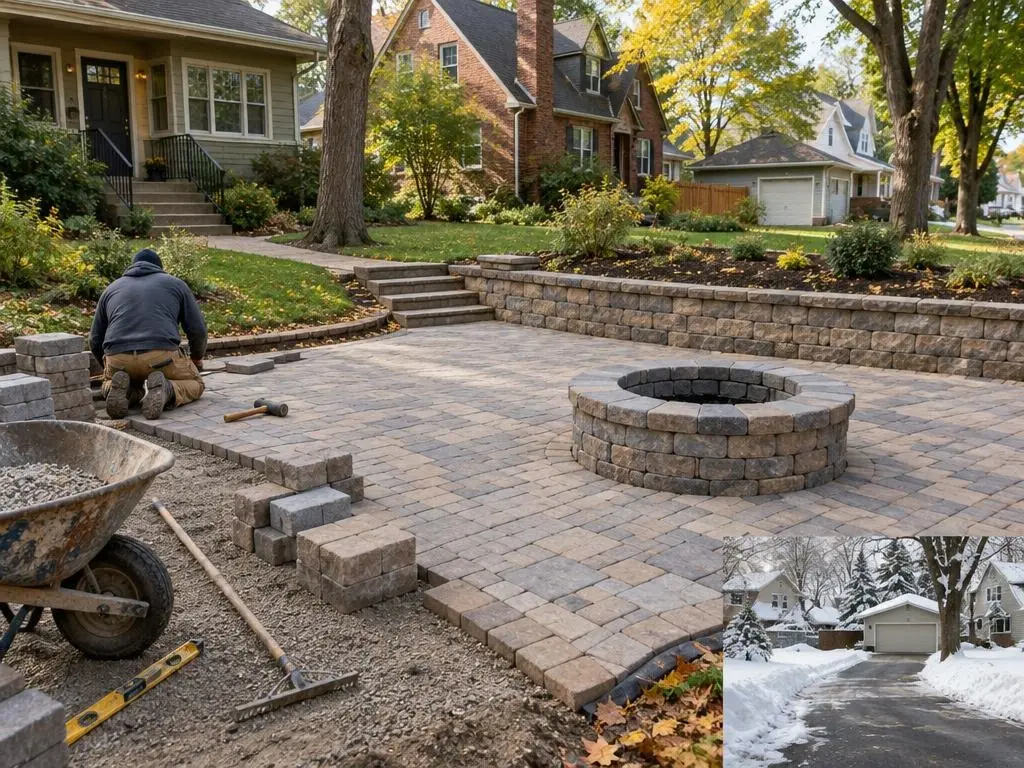
New paver walkways and careful repair of sunken, rocking or weedy pavers across Plymouth's cul-de-sac neighborhoods.
- Free on-site estimates
- Written, itemized quotes with base depth listed
- Base built in compacted lifts, not dumped and leveled
Fixing and Building Walkways in Plymouth
Pavers in Plymouth are often already there. The city grew steadily through the second half of the last century, with population gains of 94.5%, 64.7%, 88.8% and 74.9% in the four decades from 1940 to 1980, and housing kept climbing from 25,258 units in 2000 to 33,208 in 2020. Some of those homes came with a paver walk or small patio, and after enough winters a walk like that can sink by the front step, tilt toward the lawn or rock underfoot. Repair and releveling is a natural fit for those yards, along with building new walkways.
Reading the symptoms
A single low spot by a downspout usually means water has washed out the bedding sand. A long dip along one edge points to a missing or broken edge restraint, letting the field creep outward. Pavers that heave every winter and settle every spring suggest the base was too thin or the soil underneath holds water. Each has a different fix, so we lift a few units and look before quoting the whole area.
How releveling works
We pull up the affected pavers and set them aside in order, scrape out the old bedding, then add and compact base material where it has thinned. Fresh bedding goes down, the original pavers return to their spots, the edge restraint is reset or replaced, and the area is compacted and sanded so the joints lock. When the units are in good shape, you end up with your existing pavers on a corrected base, not a patched look.
When a walk needs to be rebuilt
Sometimes the base was never adequate. For a pedestrian walkway, Unilock's guidance is 4 to 6 inches of compacted base, more on clay, with a 1% to 2% slope for drainage. If a walk was laid on a couple of inches of sand over topsoil, releveling only buys time. In that case we recommend rebuilding the section from the base up and can often reuse the pavers.
New walkways we build
- Front walks from the driveway to the door, with a landing at the step
- Side-yard paths to a back gate or garage service door
- Stepping paths through planting beds
- Wider entries that replace a narrow builder walk
- Borders that tie a new walk to an existing patio
Cul-de-sac lots and odd shapes
Plymouth maintains about 300 miles of streets and 863 cul-de-sacs. Lots at the end of a bulb tend to be pie-shaped, with narrow frontage and a wide back yard, which means walks often curve and paths to the back are long. Curves need cut pavers along the edges and a firm restraint to hold them; we lay out the shape on the ground with you before cutting anything.
Lakes in the story
The town's first settlement was on the northwest shore of Parkers Lake in 1855, and Medicine Lake, named from a Dakota word meaning Lake of the Spirit, drew hotels and visitors by the 1860s. Homes near the lakes and the low ground around them can see wetter soils. Where we find that, we add base depth and make sure the walk sheds water away from the house.
Permits and digging
Under the Minnesota building code, sidewalks and driveways that are not part of an accessible route are generally exempt from a building permit, so a typical front walk does not need one. Any dig still starts with a Gopher State One Call locate request (811) so buried lines are marked.
Ask for a look
Call (952) 800-9409 or
. Send a photo of the problem area if you like; we follow up with an on-site check and a written quote that says whether releveling or a rebuild is the right call.Plymouth Background
- Decades of steady growth. Plymouth's population rose 94.5%, 64.7%, 88.8% and 74.9% in the four decades from 1940 to 1980, and housing units grew from 25,258 in 2000 to 33,208 in 2020.
- A city of cul-de-sacs. Public works crews maintain about 300 miles of streets and 863 cul-de-sacs, which shapes many lots into pie-shaped parcels with curving walks.
- Lake-shore beginnings. The town began on the northwest shore of Parkers Lake in 1855, and Medicine Lake became a local tourist destination with hotels in the 1860s.
- Settled homeowners. About 75.1% of Plymouth homes are owner-occupied, the median owner-occupied value is $491,200, and 88.9% of residents lived in the same house a year earlier (Census ACS 2020-2024).
- Walks usually permit-exempt. Minnesota's building code exempts sidewalks and driveways that are not part of an accessible route from building permits.
Our Services in Plymouth, MN
Plymouth Questions
Can you fix just the sunken part of my Plymouth walkway?
Yes, if the rest of the walk is sound. We lift the low section, rebuild the base and bedding under it, and reset the same pavers so the repair blends in. If we find the base is thin everywhere, we will tell you before doing a patch that will not last.
Why do my pavers rise every winter and drop every spring?
That usually means water is getting into a base that is too thin or into soil that holds moisture, then freezing. Releveling alone will not stop it. The fix is a deeper compacted base and a slope that moves water off and away.
Do I need a permit for a new front walk in Plymouth?
A private walk that is not part of an accessible route is generally exempt under the state building code. We still request utility locates through Gopher State One Call before digging.
Free Estimates in Plymouth, MN
Free on-site checks for paver repair and new walkways in Plymouth.
Pavers Near Plymouth
- Pavers in Minneapolis, MN
- Pavers in Saint Paul, MN
- Pavers in Edina, MN
- Pavers in Bloomington, MN
- Pavers in Maple Grove, MN
- Pavers in Eden Prairie, MN
- Pavers in Minnetonka, MN
- Pavers in Blaine, MN
- Pavers in Coon Rapids, MN
- Pavers in Lakeville, MN
- Pavers in Apple Valley, MN
- Pavers in Eagan, MN
- Pavers in Woodbury, MN
- Pavers in Prior Lake, MN
- Pavers in Chanhassen, MN
- Pavers in Shakopee, MN
- Pavers in Andover, MN